
Meet Our Team & Researchers
Staff
Aug 2021-Present
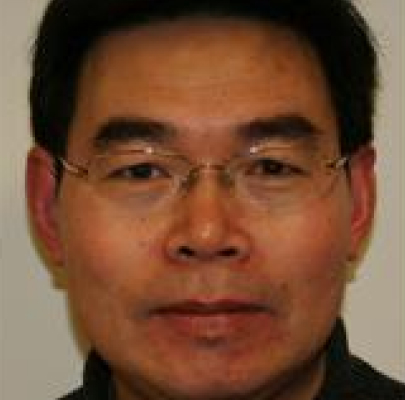
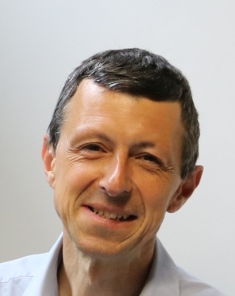
Professor Mei’s is an archaeo-metallurgist, specializing in the origins and role of metallurgy in Early China, and cultural interactions between China and the West.
He studied physical chemistry in metallurgical processes and the history of science and technology at the Beijing University of Iron and Steel Technology (now the University of Science and Technology Beijing, USTB) in the 1980s. He first came to Cambridge in 1994, as a Li Foundation scholar working at the Needham Research Institute, then began his PhD study in archaeology at the University of Cambridge with a scholarship offered by the East Asian History of Science Foundation, Hong Kong. After postdoctoral work in Tokyo and Cambridge he returned to China in 2004 as a professor at the USTB and Director of the Institute of Historical Metallurgy and Materials. In recent years he has been a leading member of the team formed to write the volume on non- ferrous metallurgy for the Science and Civilisation in China series, founded by the great British sinologist and historian of science Joseph Needham (1900-1995). He is active in a number of international research groups, and is currently President of the International Society for the History of East Asian Science, Technology and Medicine. In January 2014, he joined the Needham Research Institute as its Director.
Professor Mei is a Fellow of Churchill College, and Fellow of the McDonald Institute for Archaeological Research, University of Cambridge.
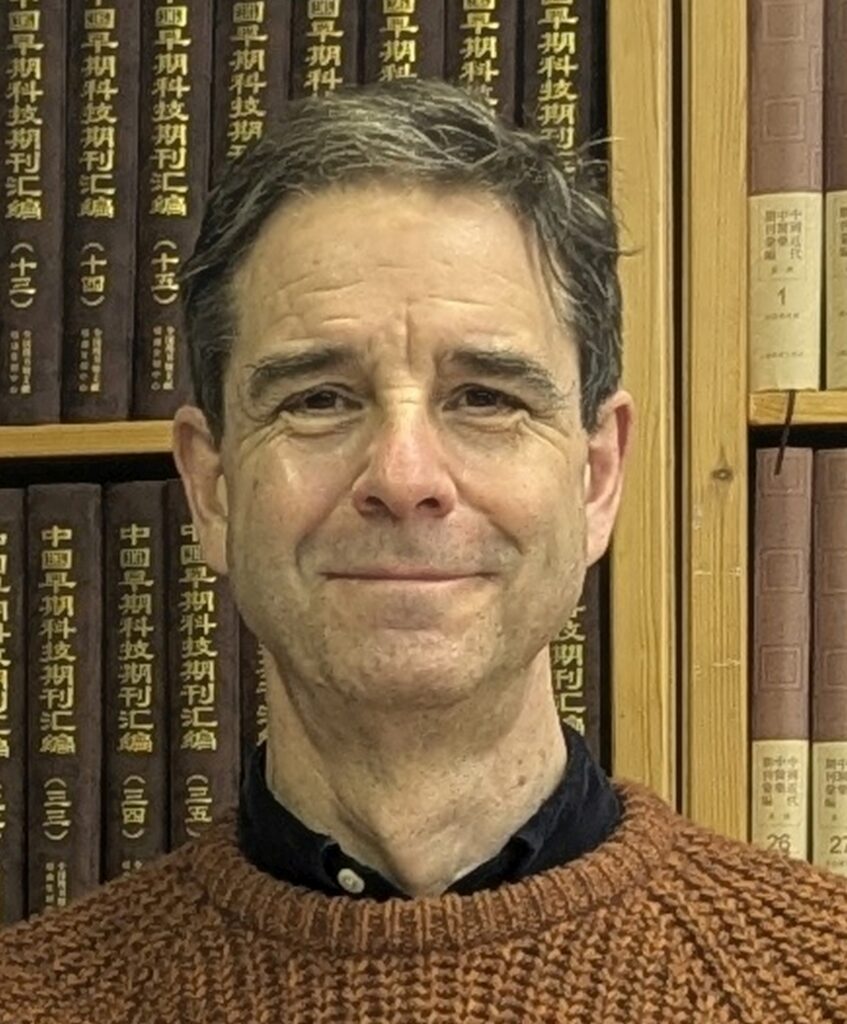
John Moffett is a graduate of the Chinese Studies Department, Edinburgh University. He has been Librarian of the East Asian History of Science Library at the NRI since September 1992. He has served on various professional committees in Cambridge and is currently Chair of the China Library Group.
Ros Grooms holds a PhD in English and American Literature from the University of York (England) and a Master of Archival Studies from the University of British Columbia (Canada). She joined the NRI in 2018 to catalogue the papers Joseph Needham collected on his travels, complementing the previous archivist’s work on the Science and Civilisation in China files. She worked on a Wellcome funded cataloguing and digitisation project entitled ‘Science and Medicine in China from World War II to the Cultural Revolution: Sources from the Archives of Joseph and Dorothy Needham,’ which resulted in photographs published on the Cambridge University Digital Library, a workshop, information banners, conservation and cataloging work. In 2023, she began cataloging the NRI institutional records, which include minutes of meetings, administrative correspondence and building plans. In 2024, thanks to a grant from the Chiang Ching-kuo Foundation for International Scholarly Exchange, she began her current project to catalogue and conserve the papers of Lu Gwei-Djen.
Our Team
Researchers
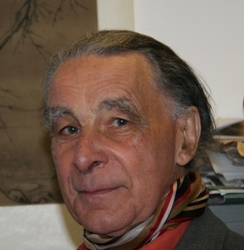
Throughout my University career I have been based chiefly at Cambridge, holding various University and College posts, first at King’s and then at Darwin. From 1983 onwards I held a personal Chair in Ancient Philosophy and Science and from 1989 to my retirement in 2000 I was Master of Darwin College. I was Chairman of the East Asian History of Science trust, which is the governing body directing the work of the Needham Research Institute from 1992 to 2002, and I am currently Senior Scholar in Residence at that Institute.
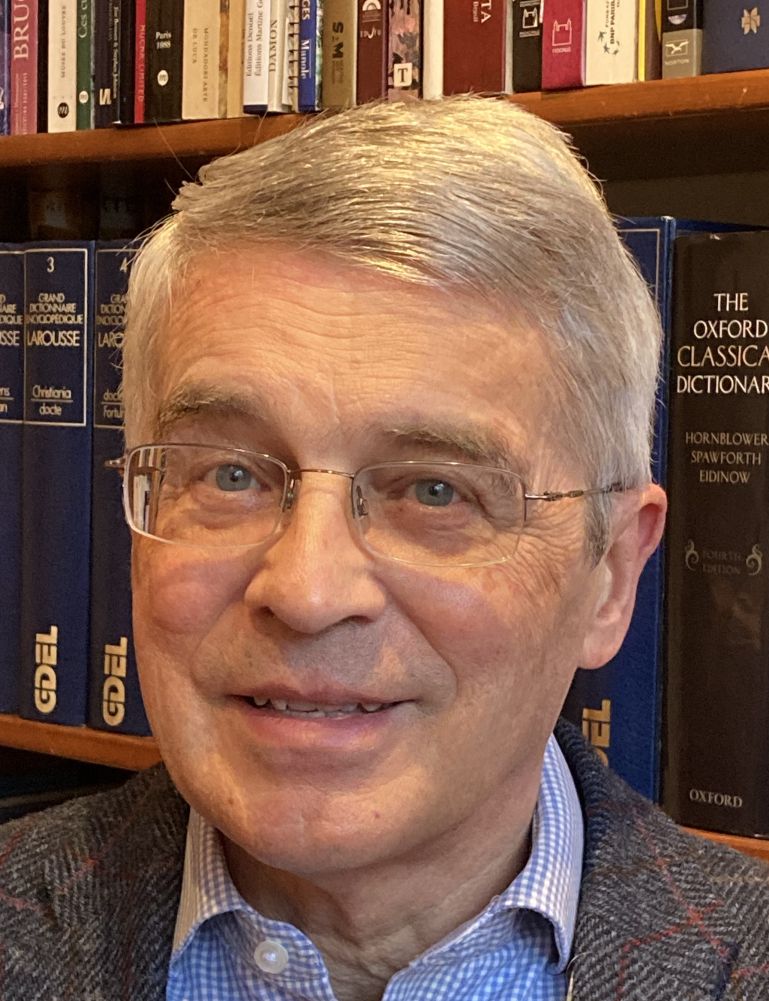
Christopher Cullen originally trained as an engineer, and holds an MA from Oxford in Engineering Science (BA 1967). He has a PhD in Classical Chinese from the School of Oriental and African Studies (SOAS), University of London (1977). He was a Stipendiary Research Fellow of Clare Hall, Cambridge, from 1977 to 1981. He served as Director of the Needham Research Institute, Cambridge (NRI) from 2003 to 2014, after spending more than a decade as Senior Lecturer in the History of Chinese Science and Medicine in the Department of History at SOAS, while also serving part-time as Deputy Director of the NRI from 1992. He is now Emeritus Director of the NRI. He is an Associate of the unit ‘Chine, Corée, Japon’, UMR 8173 (CNRS, EHESS, & Université Paris-Cité), France, and Director of the Research Centre for the Transcultural Transmission of Science and Technology, and Silk Road Civilisation, University of Science and Technology, Hefei.
Feb. 2021-present
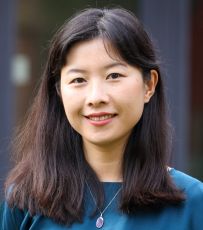
Dr Jingyi Jenny Zhao is ISF Senior Research Fellow at the Needham Research Institute and Needham Research Fellow at Clare Hall, University of Cambridge. She completed her BA, MPhil, and PhD in the Faculty of Classics at the University of Cambridge, and has held fellowships at the Library of Congress in Washington D.C. and Ludwig Maximilian University of Munich.
Her research adopts a cross-cultural, comparative approach to ancient Greek and early Chinese philosophical traditions, with a particular focus on moral education and the concept of the good life. She is also deeply engaged with broader methodological questions surrounding comparative research, including the significance of a cross-cultural engagement with the Classics in the 21st century.
Dr Zhao is co-editor and contributor to Ancient Greece and China Compared (Cambridge University Press, 2018) and author of Aristotle and Xunzi on Shame, Moral Education, and the Good Life (Oxford University Press, 2024). She is active in public outreach, having appeared in the BBC documentary The Story of China, been interviewed by The Guardian, and published a series of interviews with leading thinkers via her WeChat public account (jing yi fang tan “静一访谈”), as well as in various journals and magazines.
In 2024, she founded the Sino-Hellenic Network, an international platform for scholars working on the comparative study of ancient Greece and early China. More information is available on her personal website: www.jingyizhao.com.
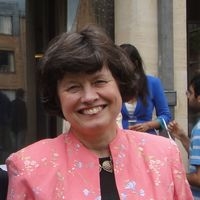
2017-present
Sally Church has a BA in Chinese history from Middlebury College (Vermont). Her MA from the University of Chicago and PhD from Harvard were both in Chinese literature. Formerly an Affiliated Researcher in the Faculty of Asian and Middle Eastern Studies, she is a Research Associate in the Centre of Development Studies and an Emeritus Fellow at Wolfson College in addition to her NRI affiliation. Her academic work focuses on various aspects of pre-modern Chinese history and the Silk Road, including the maritime expeditions of Zheng He (1405-1433), the overland expeditions of Chen Cheng (1413-1420), and the travels of Faxian to India (399-414). She recently co-edited with Imre Galambos a translation of Rong Xinjiang’s work, entitled The Silk Road and Cultural Exchanges between East and West (Brill 2023). She is also Director of the UK educational charity Civilizations in Contact (Reg. No. 1148995). Sally is currently a Research Associate at the NRI working on a critical edition of the Longjiang chuanchang zhi 龍江船廠志.
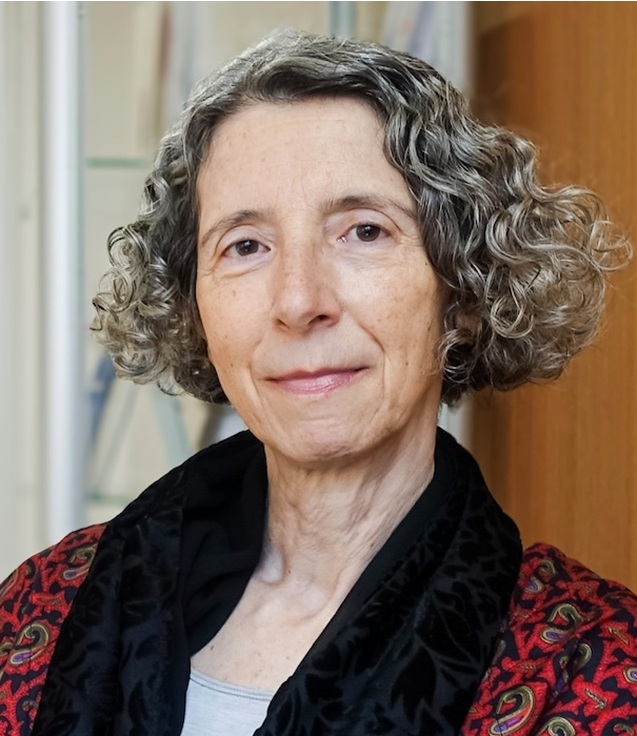
2024-
Catherine Jami is a Senior Researcher at the Centre National de la Recherche Scientifique, Paris. A former student of the Ecole Normale Supérieure, she has a dual background in mathematics and Chinese studies. Working at CNRS since 1991, she has studied the reception of European sciences introduced into China by the Jesuits from the early 17th century onwards. Starting with the mathematical sciences, she has extended her work in several directions: imperial science at the beginning of the Qing dynasty (The Emperor’s New Mathematics: Western Learning and Imperial Authority in China during the Kangxi reign (1662-1722) (Oxford University Press, 2012); the role of elite mobility in the circulation of knowledge Individual Itineraries and the Spatial Dynamics of Knowledge: Science, Technology and Medicine in China, 17th-20th centuries [edited] (Paris, Collège de France, 2017); the circulation of science between Europe and East Asia, with a series of books co-edited with Luis Saraiva (Singapore, World Scientific); in collaboration with Christopher Cullen, she is working on Sino-European exchanges in the field of astronomy in Qing China. In addition to this research, she has held positions of responsibility at an international level. In particular, she was Secretary General of the International Union of History and Philosophy of Science and Technology. She has been the editor-in-chief of the journal East Asian Science, Technology and Medicine from 2017 to 2024.
2019-
Dr. Wang Xiao had a long career working for the Elephant Press 大象出版社 in Zhengzhou. He obtained his PhD from Shanghai Jiao Tong University with the thesis A Study on the Revolutions of Publishing Technology in China since the beginning of the 19th century: the Industry Revolution and the Information Revolution, 1807-2010, subsequently published as a book. His recent research has focussed on the publishing history of Needham’s Science and Civilization in China (SCC), based on the archives held at the NRI. Now he is working on utilising new Artificial Intelligent text-analysing technology to compile a general English-Chinese index for SCC, in order to facilitate the work of other scholars and translators.
2021-
Wu Huiyi, chargée de recherche at the French Centre National des Recherche Scientifiques (CNRS), received professional training as a translator and completed her PhD in history in 2013 under joint supervision between Université Paris Diderot and Istituto Italiano di Scienze Umane (Florence). She was ISF fellow at the Needham Research Institute from 2013 to 2020, before taking up the position at the CNRS in 2021. In her first book, Traduire la Chine au XVIIIe siècle (Editions Honoré Champion, Paris, 2017), she examined French Jesuits’ translations of Chinese texts and the formation of European knowledge of China during the early 18th century. She works on knowledge circulation between China and Europe between 16th and 18th century, with a particular focus on the Francophone word, and on the materiality and spatiality of knowledge.
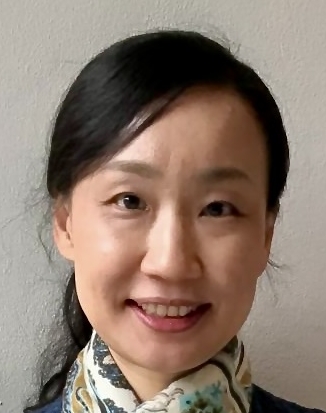
Oct. 2025-September 2028
Yumi Suzuki has been working on Sino-Hellenic comparative history of philosophy and science for many years. She completed an MA degree in Ancient Greek Philosophy and an MA research degree in Classics at Durham University, then a PhD degree in Chinese and Comparative Philosophy at the University of Hong Kong. She has previously worked as a lecturer and postdoctoral research fellow at the University of Hong Kong, East China Normal University, and the University of Bern. Her main research interests lie in scientific methods and reasoning including definition, logic, deduction and induction, as well as human cognition and understanding of nonhuman living beings. Her current project addresses nomenclature and classification of animals and plants in early Chinese and ancient Greek “zoological” and “botanical” sources. She is also completing a co-edited volume, Green Antiquity: Comparing Environmental Thought in Early China and Ancient Greece (Cambridge University Press) as well as a monograph based on her MA and PhD theses.
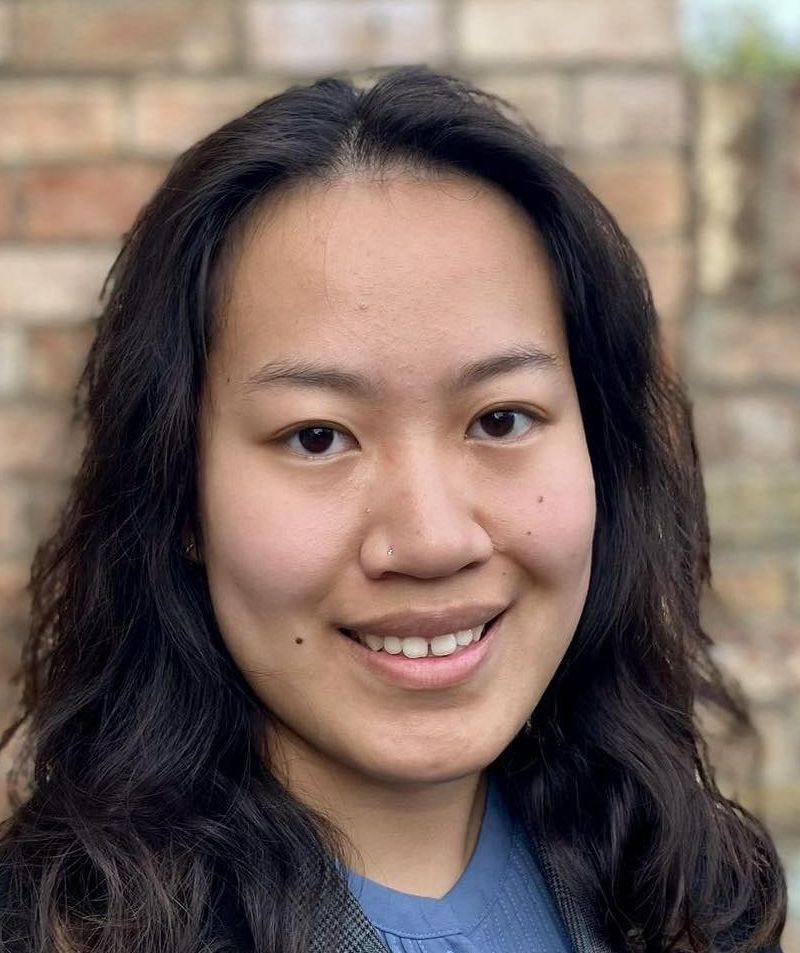
October 2023-
Chen Zhiyu is a PhD student in the Department of History and Philosophy of Science. Her project, funded by Gates Cambridge, investigates the entanglement of geographical knowledge in the South China Sea between the sixteenth and seventeenth centuries. She is generally interested in the history of science and medicine from a cross-cultural perspective, focusing on processes such as translations and the transmission of visual and material culture.
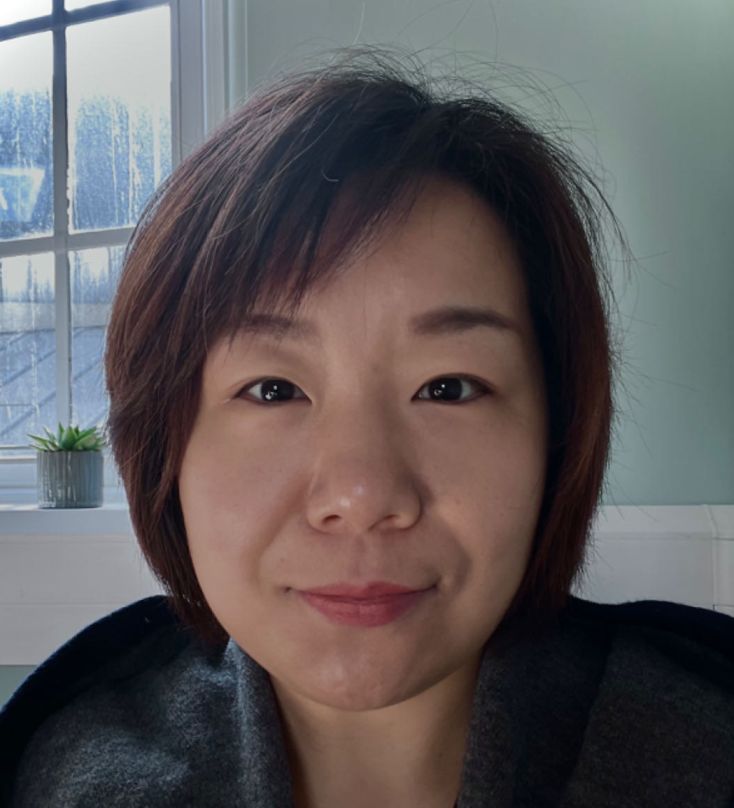
Oct. 2025 – April 2026
Jia YU 余 佳 holds a doctorate in the History of Science from the University of Cambridge. Specialising in cross-cultural analysis of science, technology, and medicine in the nineteenth and twentieth centuries, she is interested in questions exploring the nature of knowledge and expertise as operative sources of cultural, material, and linguistic conventions. While a Research Associate at the NRI she is developing a book project based on her doctoral research titled Nature and Its Scholars: A History of Bowu in Chinese Learned Culture. This illuminates how interpretations of bowu — a Chinese term often translated as ‘natural science’ — inhabited and contributed different conceptions and studies of nature in China over time. She is also finalising her research papers, including Stanley Gerr’s wartime translation cabinets (one of NRI’s own collections) and an analysis of the ‘experience of nature’ and field trips in Republican China.
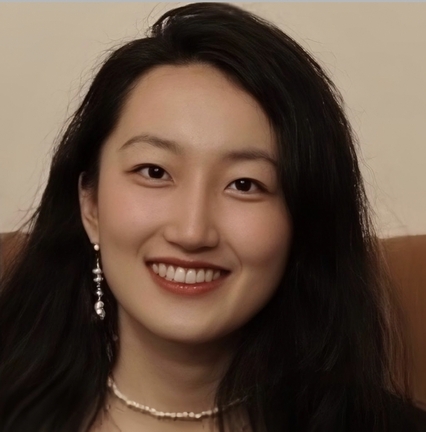
Jan-Sep 2026
Mengyuan Tian completed her PhD in Chinese Studies at the University of Cambridge, where her thesis focused on the reconstruction of the Yellow Emperor Worship Ceremony in contemporary China. While at the NRI, she will be working on a second project exploring the scientisation, industrialisation, and commercialisation of Traditional Chinese Medicine in the People’s Republic of China (PRC). She is particularly interested in the elderly care and wellbeing industries in contemporary China, including senior living real estate and the wellbeing sector.
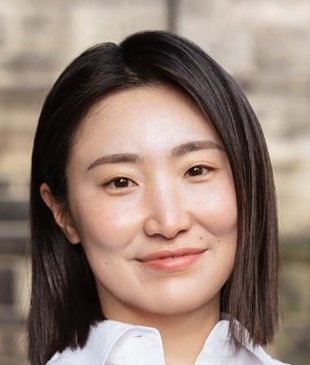
Jan-June 2026
Sung Soo Lee is a historian of modern Korea and East Asia and recently received her PhD from the University of Toronto. Her research explores the ways energy, infrastructure, and environment function as intertwined forces in postcolonial socialist state-building during the cold war. Her work examines how hydropower and electrification—ranging from monumental dams to small-scale rural projects—mediated relations between technology, nature, and everyday life in North Korea. At the Needham Research Institute, she is developing her first book manuscript, Promise and Peril: Hydropower and the Making of Socialist North Korea, which reconsiders socialist development through the lens of uneven and contested energy transitions.
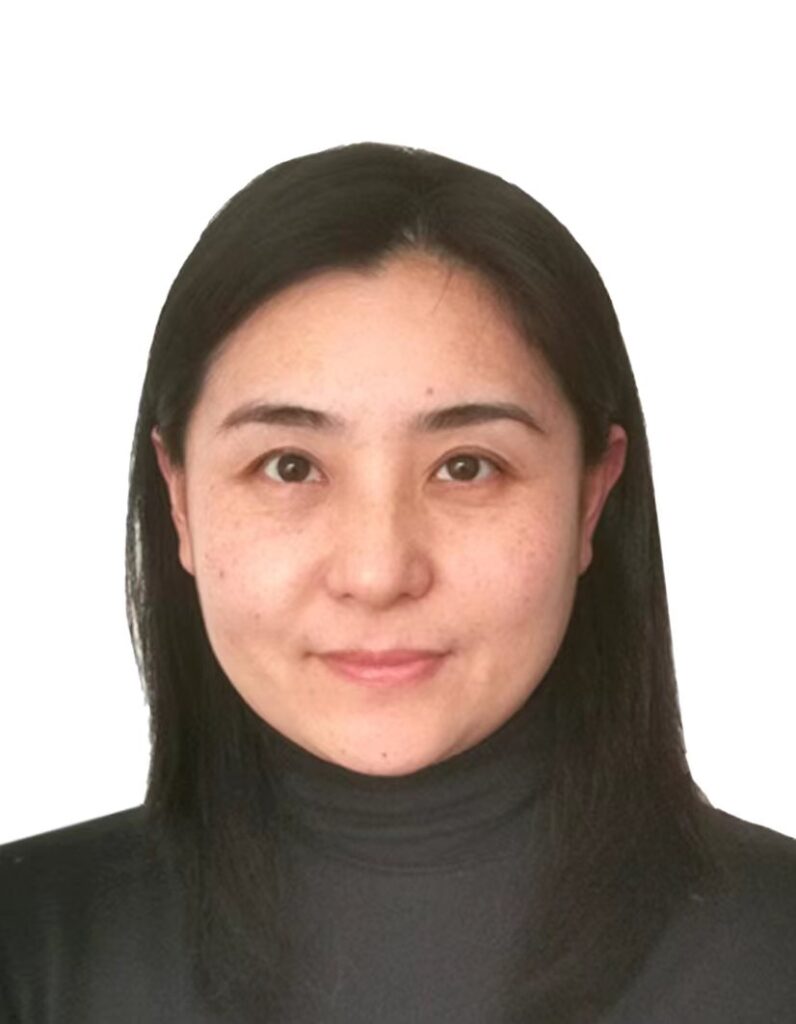
November 2024-November 2025
Professor Liu Jie holds a professorship at the Research Centre for Philosophy of Science and Technology at Shanxi University. Her primary research focus lies in the philosophy of mathematics, with a particular emphasis on mathematical structuralism. Currently, she is engaged in a project centered on structural accounts of mathematical explanation, aiming to elucidate the connection between mathematics and the natural sciences.
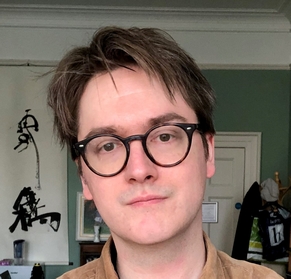
Oct. 2025-Sept. 2026
Oliver Hargrave is a Research Associate at the University of Oxford and is currently researching the intellectual history of rainbows in pre-modern China at the NRI. He is interested in the intersection of Chinese conceptions of the natural world with intellectual history, including philosophy and religion. His DPhil research was on textual representations of trees in Early and Medieval China, with a particular focus on strange or unusual trees and how they were understood.
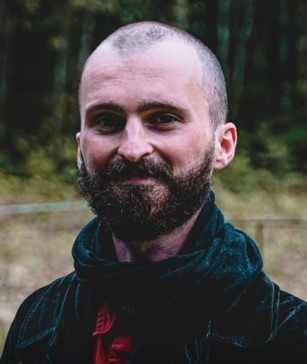
Oct. 2025-Sept.2026
John Donegan-Cross completed his BA in Chinese at the University of Edinburgh, his MPhil in Traditional East Asia at the University of Oxford, and his PhD at the University of Cambridge. For his thesis he focussed on the significance of birds in Early Chinese Poetry. His second project explores the relationships between astronomical knowledge and poetic imagery in poetry of Late Imperial China.
Jan-June 2026
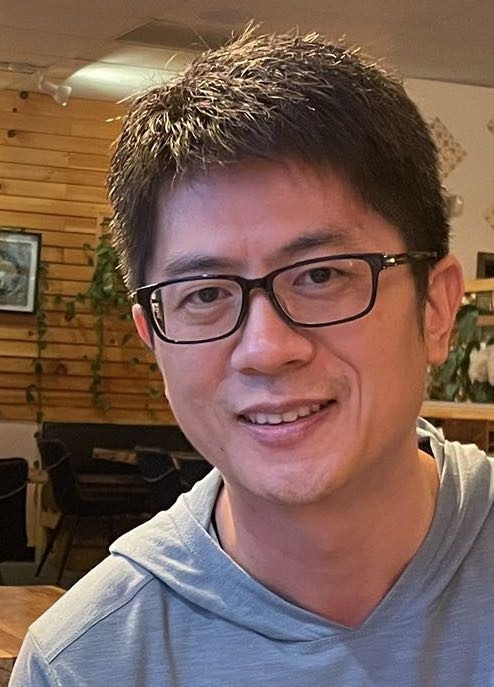
Arthur Erqi Cheng received doctoral training in China and the United States and is currently a research affiliate in the East Asia Program at Syracuse University. He serves as Book Review Editor for Asian Medicine, coordinating reviews on scholarship in Chinese medicine. His research focuses on medical knowledge, visual culture, and intellectual history in late imperial and modern China in a global context. At the Needham Research Institute, he is completing his book manuscript, Uncommon Cures: Making Medicine from the Body in Early Modern China, which examines the history of Chinese pharmaceuticals and their technical and ethical dimensions.
Nov. 2025-May 2026
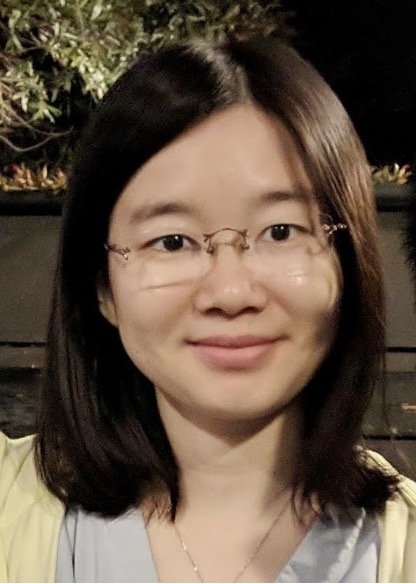
Cai Yin is a recent PhD from the University of Chicago. She is interested in nature, craft, and empire as three intertwined themes in the history of late imperial China. Her dissertation examines how textile craft and knowledge of the natural world were interwoven, and their historical significance to the Qing Empire’s material governance in an increasingly connected early modern world. At the NRI, she is developing her first book manuscript, tentatively titled Weaving Nature into Fabrics of Power: Craft, Empire, and Entangled Knowledge in Qing China.
Jan-June 2026
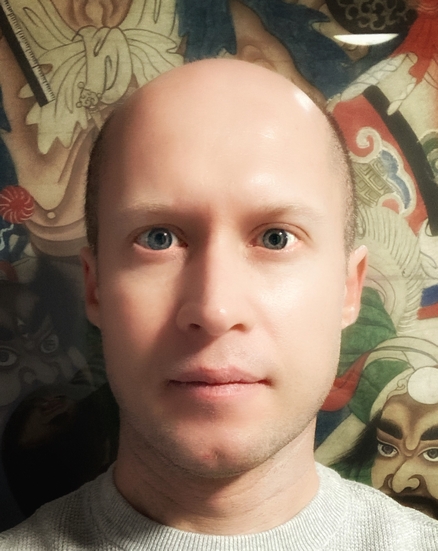
Calvin Jordan is currently a PhD Candidate at the University of California, San Diego (UCSD). He completed his B.Soc.Sci at the University of Cape Town (UCT) and MA at Rhodes University in South Africa. His doctoral research focuses on global histories of botanical science and conservation during the Cold War era, with interests in ways transnational science and diplomacy inform political, environmental, and scientific developments. At the NRI, his project examines globalized botanical institutions with interest in materials that involve Kew Gardens, Chinese cities like Hong Kong, and Joseph Needham’s research.
Our Team
The Needham Research Institute Friendship Association
Join our Team
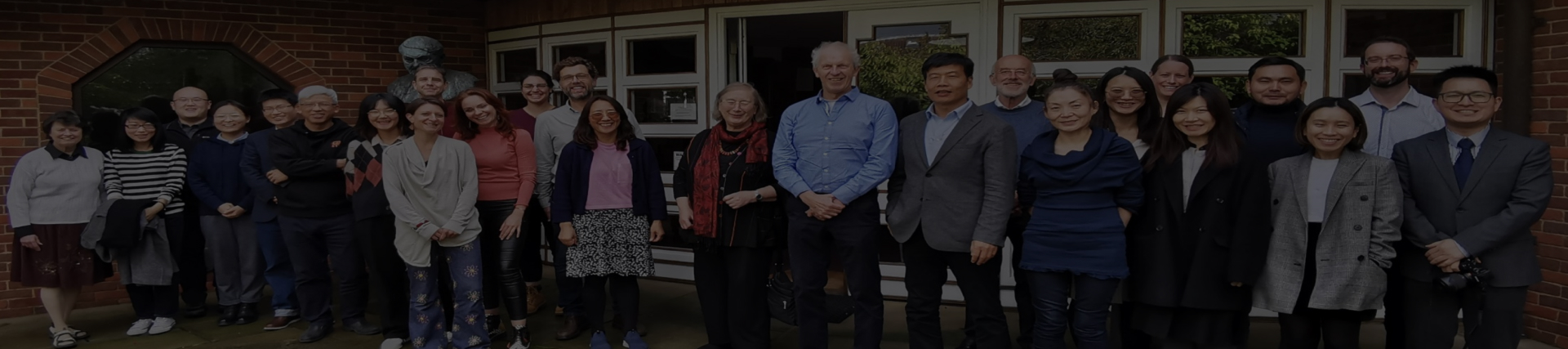
Learn more about research and career opportunities at the Needham Research Institute.
Supporting the Needham
Research Institute
Join us in advancing research and stay updated with our latest developments.